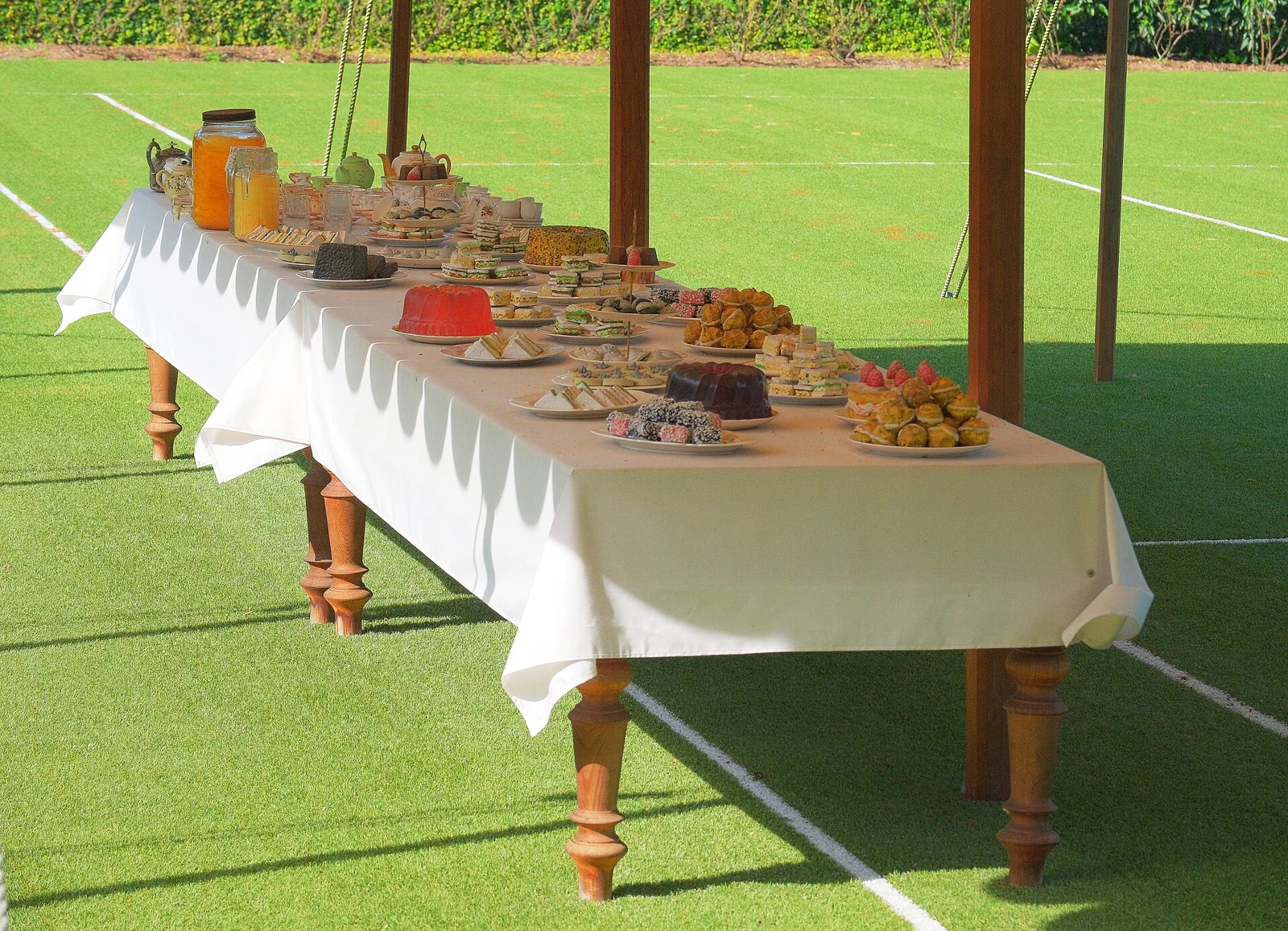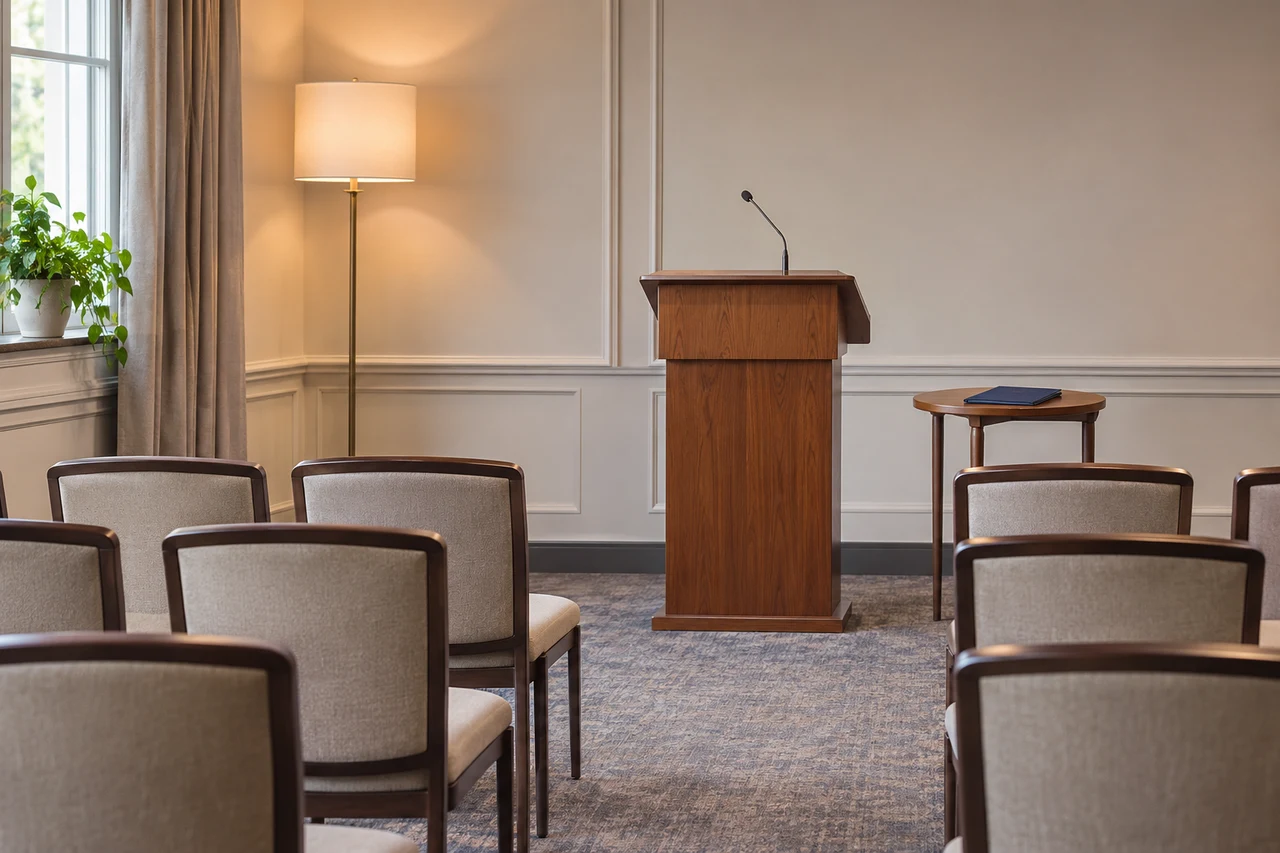
A ceremony schedule says what should happen; a usable cue sheet also says who knows it is ready. Simon Fraser University describes a run of show as a chronological sequence of event tasks and emphasizes staff roles and briefing. The original fictional example here narrows that idea to five moments in a small presentation ceremony. It is a working conversation for an imagined team, not a venue-approved production document or an event we have delivered.
Separate a cue from a hopeful time
The fictional roles are a host, a room coordinator and an AV operator. Their responsibilities below are assumptions agreed within the example, not permissions an actual venue must accept. A real organizer needs to confirm the relevant people, access arrangements, equipment limits and safety responsibilities with the venue before using a production plan.
Put the sequence on one page with four fields for each moment: the cue, the person responsible, how readiness is confirmed and the fallback already agreed. Add actual times only when the team has a basis for them. An attractive minute-by-minute column cannot establish that a speaker has arrived or that the room is ready.
Begin with the room and the arriving guests
Moment one is the room-ready check. The room coordinator confirms the agreed setup with the responsible venue staff and reports readiness to the host. If confirmation is missing, the host pauses the opening process and seeks the actual answer. The sheet supplies no instruction to bypass a venue restriction or improvise a different setup.
Moment two is guest entrance. After the appropriate readiness confirmation, the designated arrival team follows the venue’s agreed admission arrangement. The room coordinator reports an issue to the host rather than silently moving everyone to an unplanned route. Guest access requirements belong in the real event plan; this small cue sheet does not certify accessibility or replace that work.
Make the speaking and music transitions explicit
Moment three is the speaker handoff. The host finishes the agreed introduction, then gives the designated speaker the agreed spoken cue. Before that moment, the host has confirmed the person is ready. If they are not, the host uses the approved holding message and checks with the coordinator, rather than inventing a substitute speaker or reading an unfinished private note.
Moment four is the music cue. The host’s agreed closing words signal the AV operator to begin the approved audio at the agreed point. The operator confirms readiness during the briefing. If playback is unavailable, the host follows the team’s previously agreed spoken transition. The cue sheet does not provide an electrical workaround, grant music rights or authorize someone else to operate the equipment.
Give the ending an owner as well
Moment five is the closing movement. The host states the agreed next destination or ending, and the room coordinator manages the transition with the responsible venue team. If another area is not ready, the host waits for a confirmed instruction instead of sending guests toward it on an assumption. A stated fallback should remain within what the venue actually permits.
Review all five moments together at the briefing: what signal starts it, who acts, who confirms and what happens if readiness is missing? SFU’s guidance supports chronological planning and role briefing; the five cues and fallback wording are original. Before buying event software, check whether an ordinary shared page can hold those responsibilities clearly. Its value is the agreed information, not a claim that a polished document guarantees smooth delivery.
Sources & further reading
Published sources for the details and examples discussed in this story.