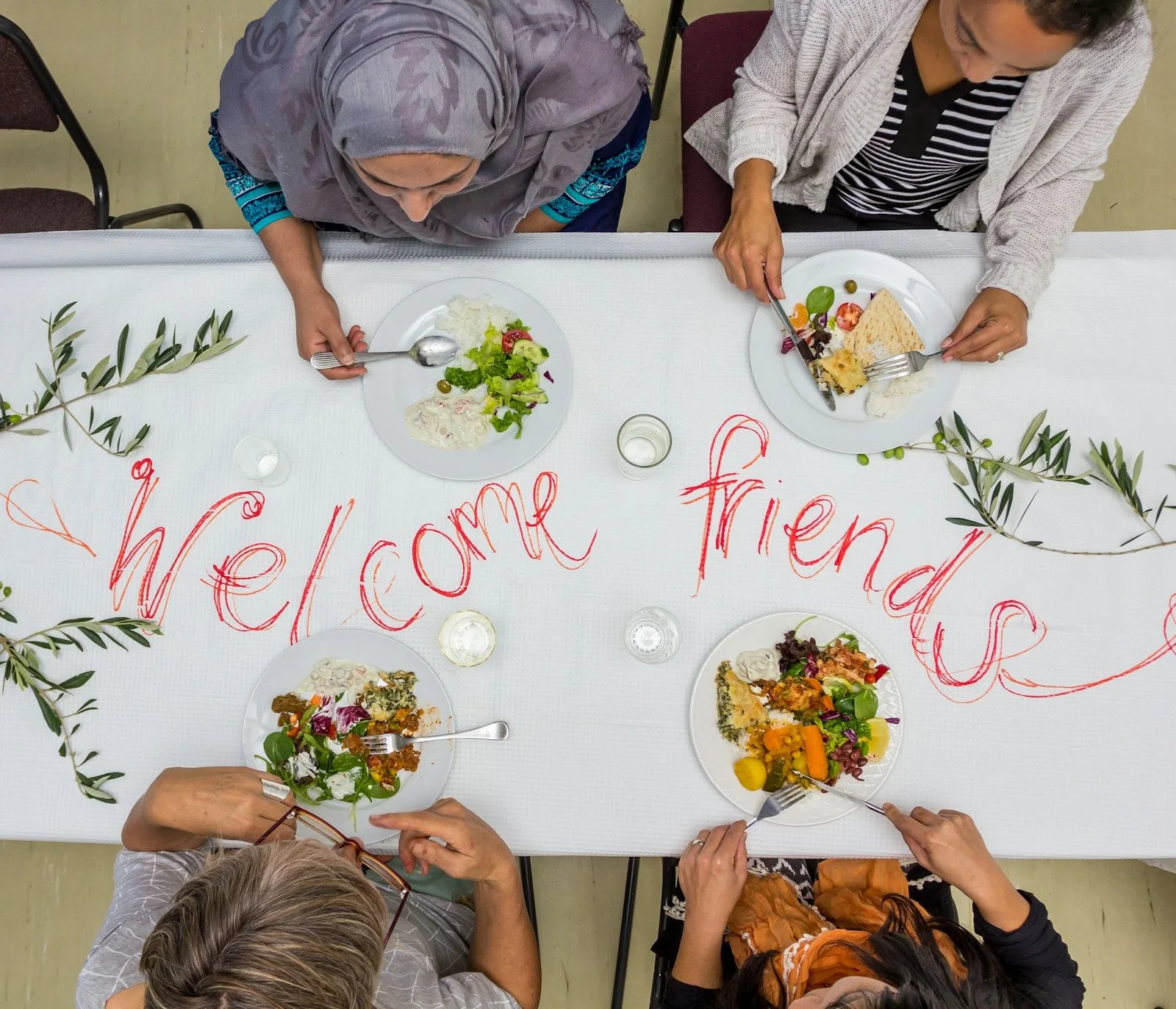
An event can be warmly photographed without every guest wanting the same kind of visibility. Someone may welcome a private group photograph while preferring not to appear in a public post or be tagged by name. Another may want to attend without being photographed at all. A useful hosting plan makes those preferences easy to express and communicates them to the people actually taking and sharing pictures. It does not promise control over every copy once an image has circulated.
Separate the moments that look similar
Taking a photograph, placing it in a private album, posting it publicly and attaching a person's name are different actions. “There will be photos” leaves all of those details open. Before the event, describe the intended arrangement in ordinary language and offer a private way for guests to raise a preference.
For a hypothetical dinner celebration, the host might plan a small album for invited guests and a few public room-detail photographs. That differs from a public gallery containing every attendee. The plan should reflect what will actually happen, not a reassuring phrase added to the invitation after a photographer has already been promised unrestricted promotional images.
Give a preference a real recipient
Decide who will receive and act on guest requests. If a photographer is engaged, discuss the actual agreed scope and how relevant preferences will be communicated appropriately. Do not assume that a guest's message to the host automatically reaches every person with a camera. Keep the necessary information limited and respectful, without making the guest explain private reasons to the whole room.
A simple response can acknowledge the preference and explain what the host can actually arrange. Do not promise that no incidental background appearance is possible unless the real setup supports that assurance. If a request cannot be reliably accommodated, say so before the event and discuss an alternative with the guest rather than presenting an unsupported guarantee as courtesy.
Courtesy is different from legal permission
This article suggests a hosting conversation; it does not provide a model release, interpret image rights or determine what consent is legally required in a particular place. Attendance, a ticket purchase or a general invitation statement should not be treated by this guide as proof of every permission needed for later publication or commercial use.
If a photographer, venue or publication proposes a particular use, address its actual terms and appropriate permissions separately. A guest's preference about a private album is not a blanket legal release. Likewise, a legal document should not be used as an excuse to disregard a considerate, workable sharing arrangement that the host has agreed to communicate.
Choose the album controls before inviting uploads
Read the actual sharing service's current settings and limits. Google Photos, for example, distinguishes album membership, link sharing and collaboration controls. Its guidance also says that turning off sharing does not delete copies or downloads that others have already made. That is a concrete reason not to promise that a shared image can always be recalled completely.
The technical arrangement should fit the stated plan. Do not call an album private merely because its title contains the word, or assume that removing one person disables every link. This feature is not a step-by-step platform tutorial or an audit of a real album. Use the service's actual instructions and confirm the intended access without uploading a guest's image as a test of an uncertain setting.
Keep requests possible during the event
Let guests know how to speak to the host or photographer discreetly if a preference changes. Avoid making a public announcement naming people who do not want photographs. A small adjustment to a group arrangement or a pause before sharing may be easier than asking someone to justify a boundary in front of the gathering.
Guests can also be asked to check before posting or tagging others, but a request is not a guarantee of compliance. Keep that distinction honest. If a concern arises afterward, respond through the actual relevant person or service and explain the action that can genuinely be taken. Do not claim that deleting one post removes all saved versions or resolves every rights question.
For the hypothetical dinner, imagine a guest who agrees to a small private group photograph but asks not to be tagged in public. Before anyone posts, the host should carry that distinction to the actual sharing decision. Omitting a tag does not answer a separate request not to appear publicly. If the host cannot distinguish the intended uses reliably, pause the proposed upload and clarify the guest’s preference privately rather than announcing it to the group.
Sources & further reading
Published sources for the details and examples discussed in this story.