A celebration can have a recognizable visual idea without printing it on everything guests touch. Repetition may connect an invitation to the table, but too many appearances can turn a small gathering into a display of its own identity. The useful question is which two places actually need that connection. Imagine a fictional lunch marking an adult's change to a new chapter of life. No real person, milestone or gathering is being described. The proposed motif is our own simple curved line, used as a visual suggestion of a turn rather than as a historical, cultural or religious symbol. Getty's design principles supply vocabulary for repetition and unity, not a claim about how guests will respond.
Give the line a reason to be there
The imaginary host wants an idea that can be understood without explaining the guest of honor's private history. A line that begins horizontally and turns gently upward offers a small visual gesture. It need not represent every difficulty overcome, every year lived or a biography summarized in graphic form.
Choose a single plain color for this fictional version. The line is not a logo for a person, and there is no need to name the motif or make the gathering sound like a commercial launch. It is a connection between two pieces of paper within an otherwise ordinary lunch.
First appearance: one corner of the invitation
On the proposed invitation, the curved line occupies a corner beside a clear area containing the actual practical information. The line does not replace words or make the time and occasion depend on decoding a symbol. The host can retain the invitation's ordinary job while giving it a particular visual character.
The rest remains plain. A second border of smaller curves would introduce another repeated system without making the initial idea easier to recognize. The single corner is enough to begin the connection.
Second appearance: a small shared table card
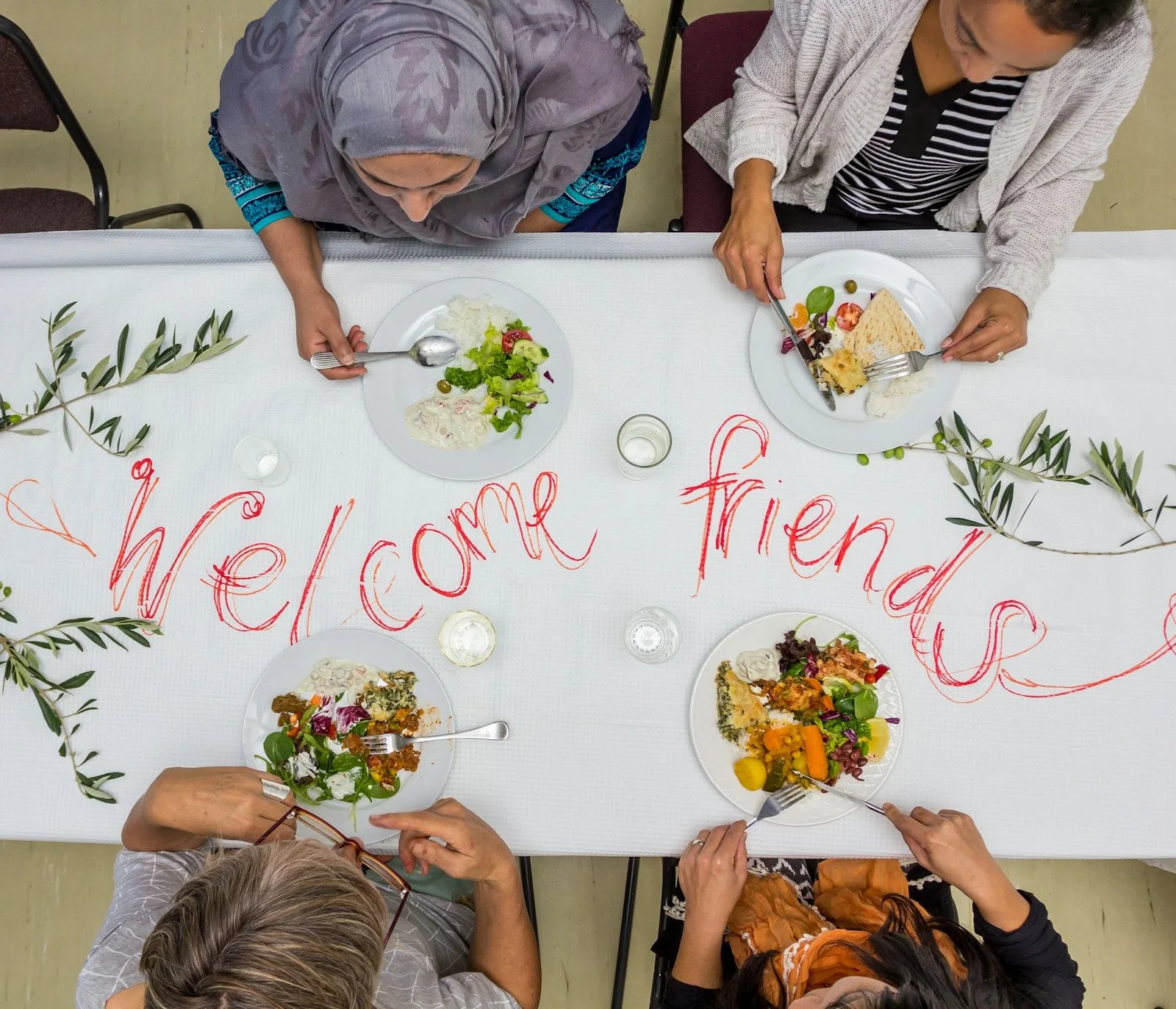
For the second and final appearance, imagine one suitable small card on an existing table arrangement, away from where it would interfere with serving or people's ordinary use of the table. It carries the same curved line and a short welcome. There are no individual motif cards at every place and no need for guests to keep a printed souvenir.
The relationship is now invitation to arrival at the table. Someone who notices the repeated line can recognize it; someone who does not still receives a perfectly readable welcome. The lunch does not depend on everybody appreciating a graphic concept.
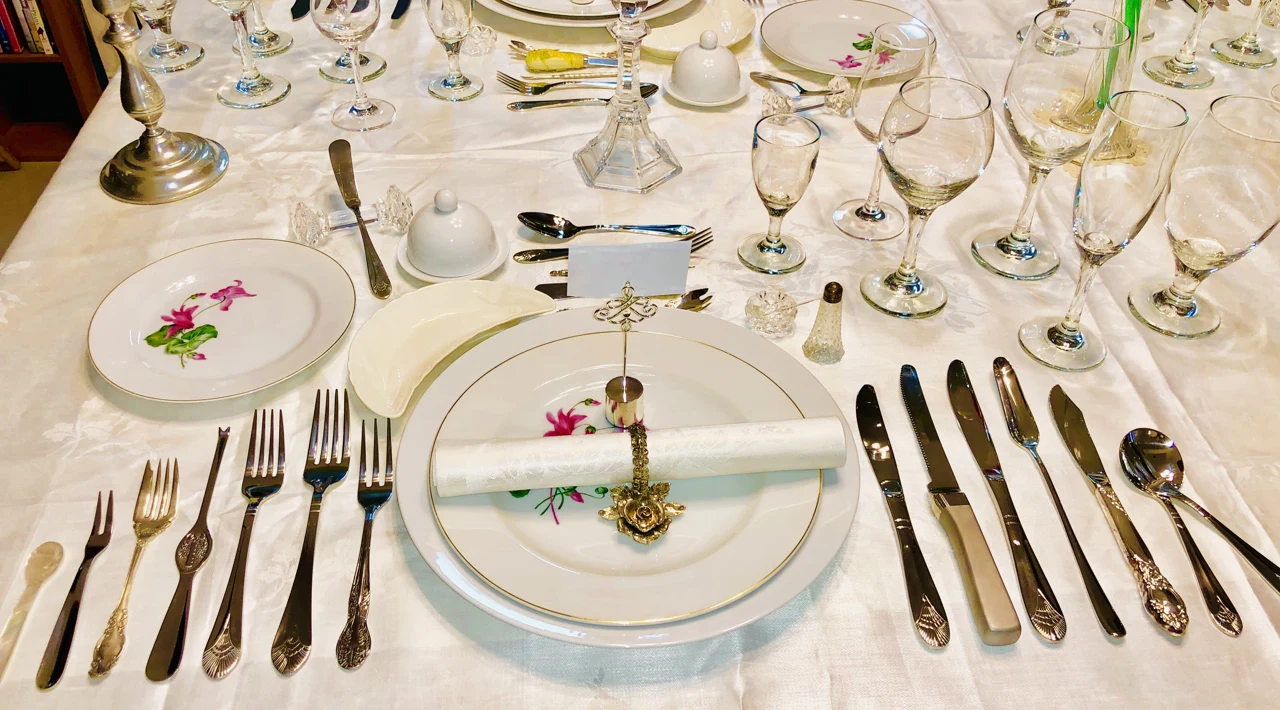
I would leave the tableware and other surroundings without the motif. Their ordinary variety gives the small repeated element a setting rather than more surfaces on which it must compete with itself.
Compare the version that keeps repeating
Imagine extending the curve to napkins, labels, a backdrop, favor packaging and each guest's name card. The gathering would become much more visibly coordinated. That might suit someone who wants that particular kind of decorated event, but it is a different intention from a limited connection at an intimate lunch.
In this fictional plan, the extra repetitions would ask for more design, production and objects to manage without supplying another necessary part of the welcome. The motif would begin to dominate the meal's image rather than quietly link two moments.
The decision is not a universal maximum of two. Two is the deliberate limit of this particular proposal, chosen because invitation and table already form the relationship the host wants.
Buy the two useful pieces, not an entire matching range
Before ordering coordinated supplies, name what each proposed appearance does. If a product adds only another place to repeat the curve, it can be left out. Existing suitable tableware and a plain background can remain entirely themselves.
Any real printing, placement and materials need to suit their actual use. This feature proposes no food-contact decoration, installation or tested event arrangement. Its small creative choice is to let the people and conversation remain more important than completing a visual theme.
Sources & further reading
Published sources for the details and examples discussed in this story.