A celebration’s details can be worth remembering without turning every corner into a photoshoot. Before asking someone to take pictures, decide what the photographs are meant to show. This original fictional brief concerns a small table arrangement in an authorized private setting. It supplies a complete planning sequence, not photographs we made or a promise that a particular camera will deliver the result.
Give the subject one job
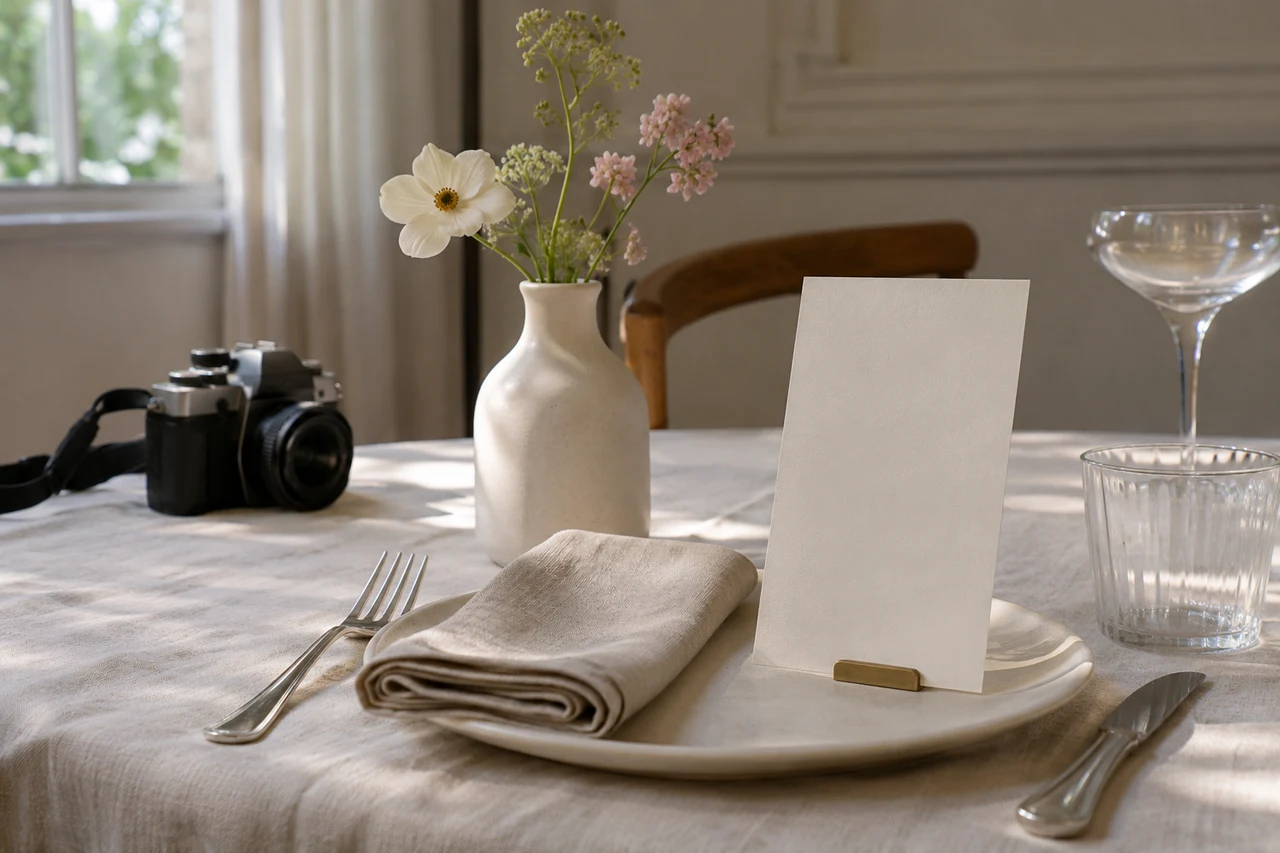
Imagine a host wants to remember a plain ceramic vase, a folded linen napkin and a small menu card together. The proposed subject is their relationship on the table, not a record of every guest or a product advertisement. Write that purpose at the top of the brief so that a later close-up does not become the only photograph requested.
List what must remain visible: the vase’s outline, the napkin’s fold and the card’s place within the arrangement. In this invented plan, the card carries no personal information and no borrowed artwork. If actual objects contain private messages or another creator’s work, address that before including them; a styling brief does not grant rights to publish everything it describes.
Plan three frames in a useful order
First request a wider view that shows the arrangement’s place on the table. Next request a middle view that brings the three objects together without requiring the whole room. Finally request a close detail of the fold and card edge. These are original proposed views, not a mandatory photographic formula or examples of actual images.
The order preserves context before moving closer. A detail might be attractive while leaving the viewer unsure how the objects belonged together. Keep the purpose beside each requested frame: location, relationship, texture. That makes it possible to stop after the useful sequence rather than collect dozens of nearly identical close-ups.
Check the frame and the permitted light
Nikon’s published background advice recommends scanning the frame for distractions and repositioning the photographer or subject when appropriate. For this plan, check all four edges for an unwanted bag, bright reflection or unrelated item. A change of viewpoint may answer the problem without moving the host’s whole table.
Use whatever light and access are actually permitted in the setting. This brief proposes no flash setup, electrical installation, camera exposure or guaranteed result from a window. If the available conditions do not support the requested view, discuss a simpler frame or a different permitted moment. Do not rearrange a working service area merely to reproduce an imagined photograph.
Agree the use before capture becomes sharing
Confirm who will take the photographs, who will receive them and the intended use. Keep a detail-only request distinct from permission to photograph guests, publish their names or use the pictures commercially. This is a practical scope conversation, not a legal release or a determination of every right that may apply.
Before buying a new lens or backdrop, see whether the actual authorized equipment and location can meet the limited brief. After a real session, the host can compare the received files with the three requested purposes and retain only appropriate material. No such session or review has happened here. The completed artifact is the brief: subject, view order, frame checks, allowed conditions and agreed destination.
Sources & further reading
Published sources for the details and examples discussed in this story.