Replacing a duvet cover need not become a complete bedding purchase. MUJI US’s Washed Cotton 25AW and Cotton Seersucker 26SS covers provide two specific designs to investigate while retaining useful pillows, sheets and room furniture. This is a comparison of published information checked November 10, 2026, with two original bedroom proposals. We have not handled, laundered or slept beneath either cover.
Decide whether the main surface should recede or provide texture
MUJI describes the Washed Cotton cover as pre-washed and lists 100% cotton. It describes the Seersucker cover’s uneven weave and also lists 100% cotton. Those are the maker’s design and composition descriptions. They do not establish a comparative sleep, cooling, breathability, softness, skin or durability result here.
The distinction I would investigate is a visually quieter main bed surface versus a surface in which texture is itself part of the design. Neither requires a thread-count ranking or a claim that one fiber is healthier. No product photograph has been assessed for an exact color match, so color names on a screen remain provisional.
Room one: let an existing patterned cushion remain the accent
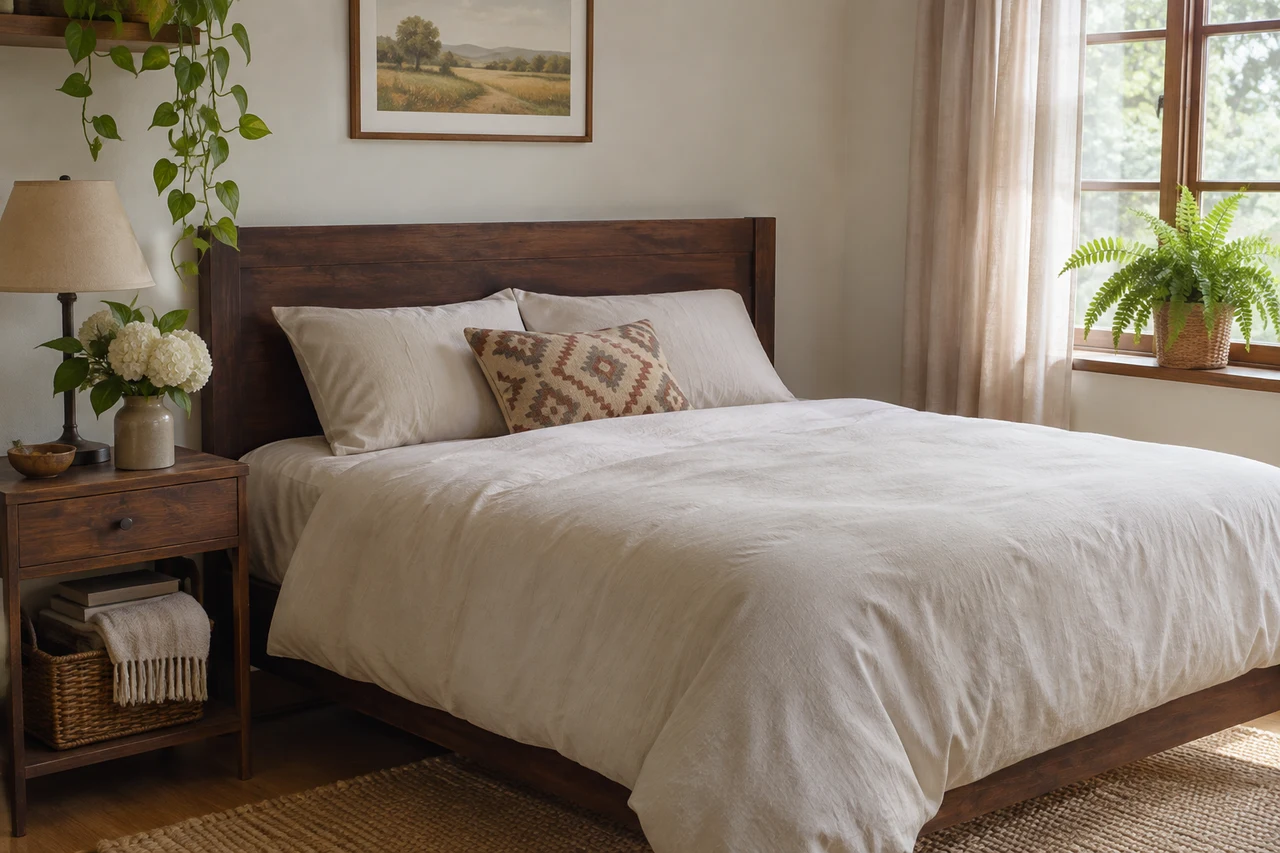
Imagine a small bedroom with a dark wood bed, plain existing sheets and one useful patterned cushion already owned. The intended change is a quieter surrounding duvet surface so the existing pattern remains the clearest decorative detail. I would investigate the Washed Cotton design for that brief, choosing a real color only after comparing it with the retained items.
This is not a requirement to make every bedroom neutral. It is a specific relationship between one existing pattern and the larger surface around it. Keep the actual number of sleeping pillows unchanged. If the present cover already produces the preferred balance, a new cover does not gain a job merely because it appears in a coordinated range.
Room two: use the cover rather than another decorative layer
Now imagine a different room with plain walls, simple existing pillowcases and no patterned decorative piece. The owner wants some visible surface interest without adding a throw that must be removed every night. I would investigate the Seersucker design because its described uneven texture could become the intended detail in the main useful cover.
That is an aesthetic proposal to assess on the actual fabric. It does not promise that the texture will look a particular way in every light or improve the experience of sleeping. Examine a permitted sample when possible. If neither texture nor color suits the existing room, keeping the current bedding is a complete outcome rather than a failed styling exercise.
Make the whole purchase fit the actual insert and laundry
MUJI warns that its bedding sizes differ from standard US and Canadian sizes. The selected Seersucker page also presents inconsistent king-size unit information, so this feature excludes all numerical cover dimensions. Resolve the exact current dimensions with the maker and compare the actual insert before purchase; a familiar size name does not settle compatibility.
Both pages direct using a laundry net, closing the fastener for washing, avoiding fluorescent brighteners on light-colored products and not ironing accessories. They warn about dark-color transfer and direct separate washing. Check the complete actual label and whether that care fits the household facilities. Neither proposal requires new sheets or pillows to imitate a set image. The sensible shortlist ends with one compatible, maintainable cover, or with the useful cover already on the bed.
Sources & further reading
Published sources for the details and examples discussed in this story.