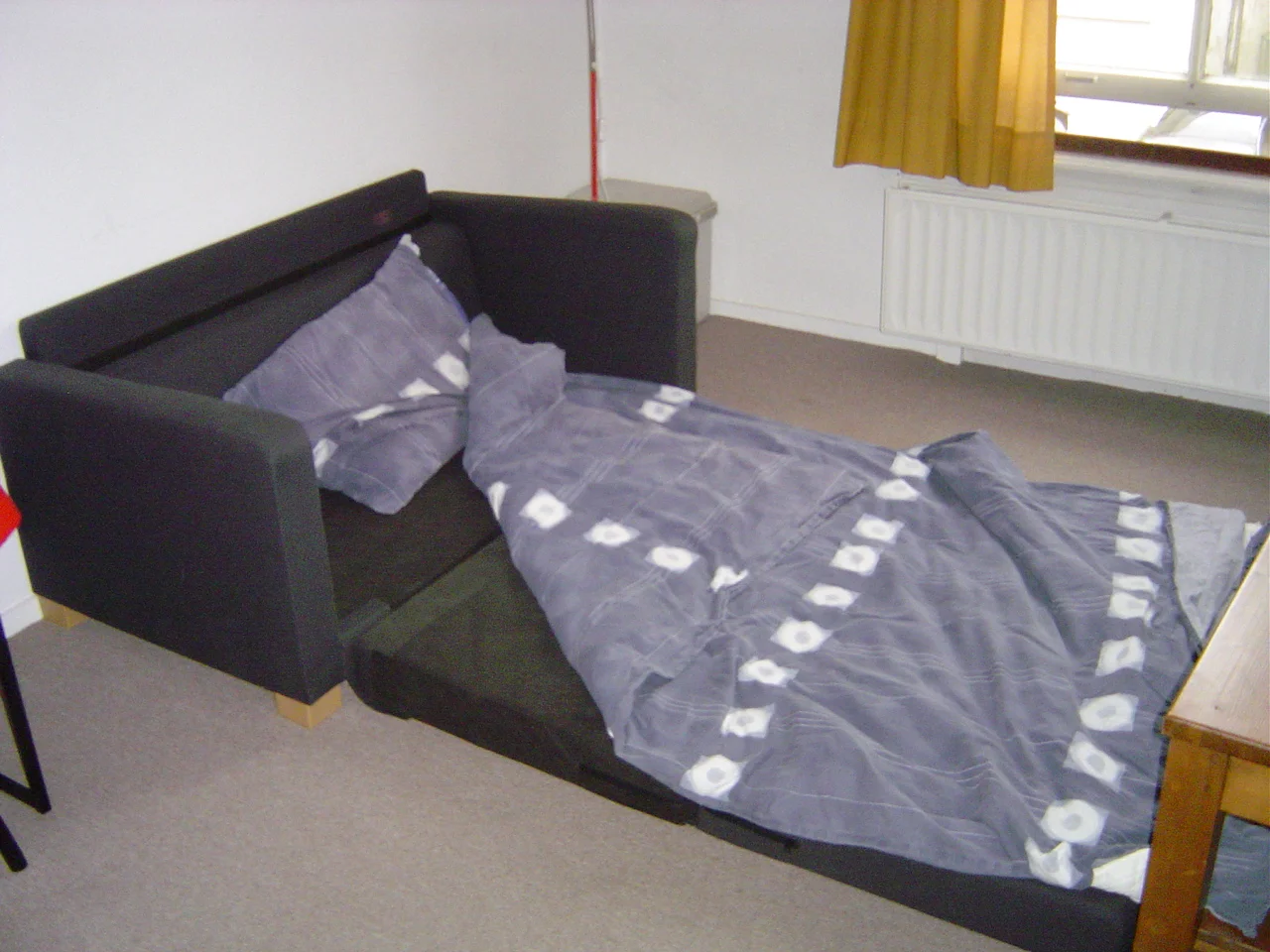
A guest does not need a dedicated spare room to feel expected. A shared living room can work when sleeping, belongings and the next morning have been considered in advance. Begin with privacy and a practical bed arrangement, then add a few small comforts that do not require filling the room with temporary furniture.
Confirm what the space can offer
Tell the guest where they will sleep and how the room is used, especially if others will need to pass through it. Discuss arrival, bedtime and the next morning without making the arrangement feel apologetic. Clear expectations are more useful than presenting a sofa bed as though it were a private hotel room.
Set up the bed before the visit if it has not been used recently. Follow its assembly and use instructions, and check the required open footprint. A room that accommodates the closed sofa may become difficult to move through once the bed is out. Keep normal exits and essential routes clear instead of treating every remaining gap as a place for another item.
Give belongings a real home
Clear a small shelf, a few appropriate hooks or part of a stable surface. The guest should not have to balance a phone on the floor beside a drink. Choose a place for the overnight bag that allows it to open without blocking the path. Emptying an existing drawer may be more helpful than buying a decorative luggage stand.
Check furniture stability and follow relevant anchoring instructions; CPSC's Anchor It guidance remains pertinent when rearranging storage. Do not create a temporary tall stack merely to clear the visible room. Items moved for the visit need a sensible place too. A thoughtful guest setup should not transfer the practical problem to a precarious corner elsewhere.
Make the night and morning understandable
Point out the bathroom, drinking water and the lights the guest may use. Offer appropriate bedding for the room and season, with an additional layer accessible if needed. Ask about requirements that affect the setup, but avoid assuming that a particular pillow or mattress accessory will suit every person.
Provide a suitable light that can be reached from the sleeping position, placed and powered according to its instructions. Explain any household quirks, such as a switch that controls several lamps or an early morning work routine. A brief practical introduction can remove the hesitation that otherwise makes a guest reluctant to move around an unfamiliar home.
Buy only the missing comfort
Use clean, suitable bedding you already own. If a purchase is needed, consider how it will be stored and used after the guest leaves. A practical fitted sheet for the actual bed dimensions is more useful than a pile of decorative cushions. Check care instructions and allow time for any required laundering before the visit.
Plan the reset so the guest knows whether to leave the bedding or put it somewhere specific. Keep that instruction simple and welcoming rather than making checkout into a chore list. When the room returns to daytime use, store dry bedding appropriately and note any small inconvenience while it is still easy to fix before the next visit.
Sources & further reading
Published sources for the details and examples discussed in this story.