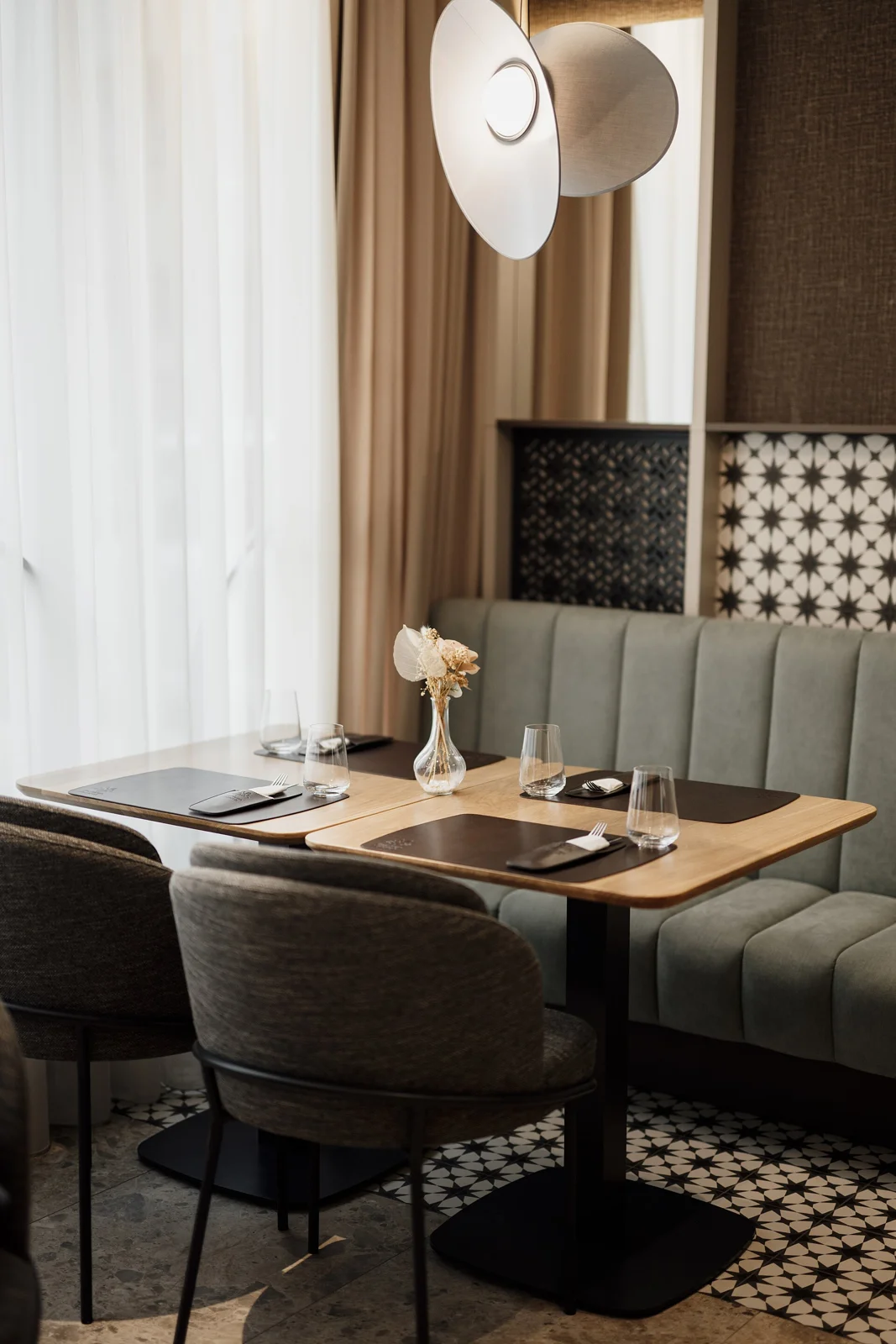
Flowers for a dinner table need to belong to the meal as well as the room. Start with the place settings and the people sitting opposite one another, then choose the arrangement. A modest group of stems in a suitable vessel can feel more generous than a large bouquet that makes conversation awkward.
Set the table before choosing the flowers
Put out the actual plates, glasses and serving dishes for one full arrangement. Leave room for hands, elbows and the things passed between guests. Check the view from a seated position on both sides. An arrangement that looks balanced while standing may block the person you want to talk to once dinner begins.
Decide whether flowers remain on the table for the whole meal or move when food arrives. If they move, give them a definite second location that is stable and out of the route. Do not buy a large centerpiece on the assumption that somewhere will be found for it in a kitchen already busy with serving.
Let the vessel limit the purchase
Choose a clean, watertight vase suitable for the surface. Check its base and opening rather than only its color. A narrow neck may hold a few stems attractively; a wide bowl may require a different approach. Use the vase you own as a shopping constraint instead of buying a bouquet and then searching for something large enough to contain it.
Consider a small group of vessels if the table is long, provided the arrangement remains easy to use. Repetition can create a coherent effect without dense flowers. Keep delicate or unstable containers away from the edge, and protect the table as needed. A repurposed object should be checked for suitability, not assumed safe because it resembles a vase.
Buy for the setting and household
Ask the florist or supplier about the stems, expected opening and their specific conditioning needs. Tell them the arrangement is for a dining table and describe the useful dimensions. If pets, sensitivities or other household needs affect plant choice, verify suitability with an appropriate source before bringing the flowers home rather than relying on a general reassurance.
Choose a limited color direction that works with the existing dishes. You do not need an exact match to the napkins. A few visually related stems can be easier to arrange than a large mixed bunch with competing shapes. Keep the purchase small enough that you can manage it without specialist equipment or an unfamiliar technique on the day.
Prepare before the meal becomes busy
RHS's cut-flower guidance explains conditioning and the use of appropriate flower food. Follow stem-specific advice and the packet directions instead of improvising additives. Prepare the arrangement in time to check for leaks and stability before the table is needed for food. Keep the working tools separate from the meal preparation area and clean appropriately afterward.
Reassess the final height while seated, then stop adjusting. After the gathering, move the flowers to a suitable place and continue their care according to the stems' needs. Notice whether the vase, scale and number of stems worked. That observation can make the next purchase more precise without requiring a completely different look every time you host.
Sources & further reading
Published sources for the details and examples discussed in this story.