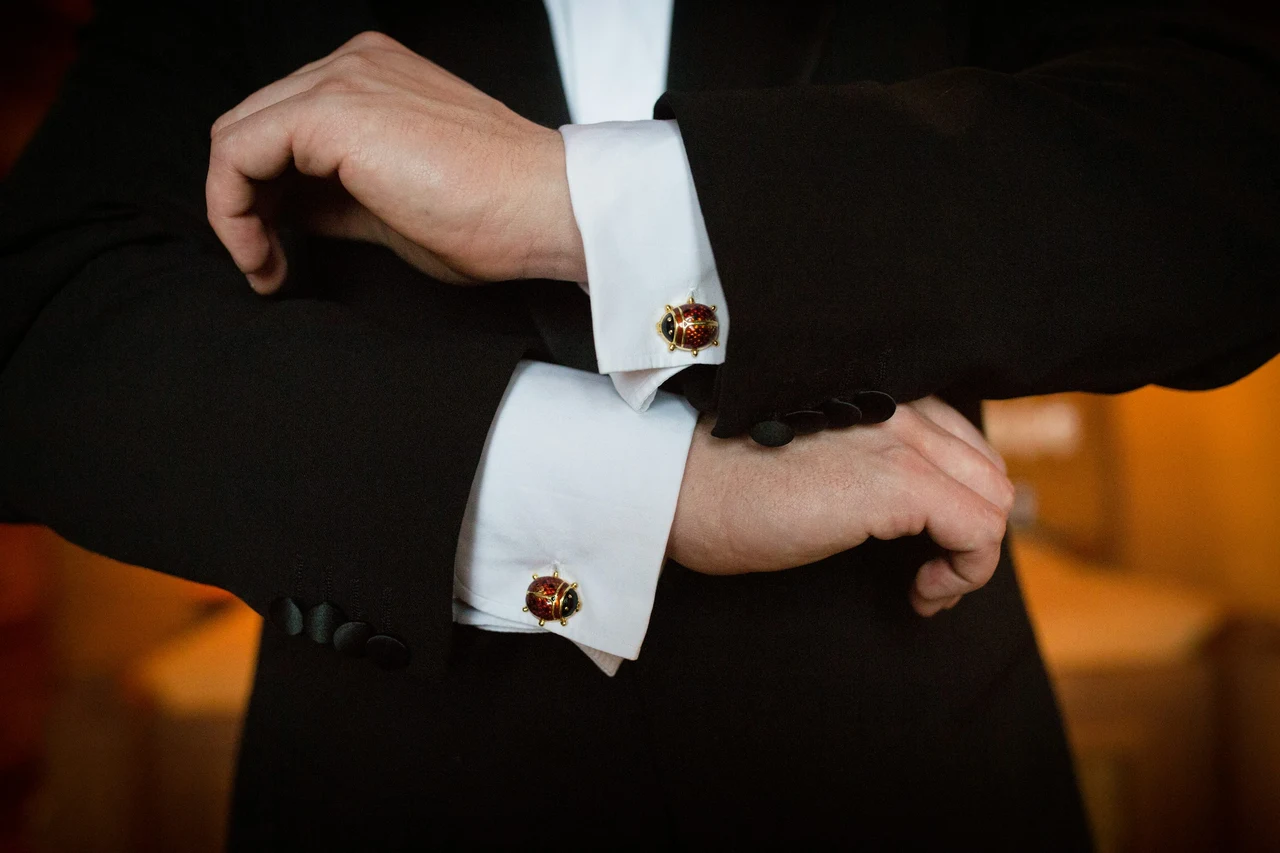
Choosing a cuff can leave a small but consequential question until the evening of an event: what will fasten it? Eton's US Custom Made descriptions offer a useful named comparison. Its French cuff is described as a double-fold style worn with cufflinks, while its specifically named Single Cuff is convertible and can be worn with buttons or cufflinks. Those statements describe intended options. They do not establish the contents of an unexamined shirt order.
| Named Eton US option | Published construction and route | Pieces to establish for the exact selection |
|---|---|---|
| French Cuff | Double-fold; worn with cufflinks | Suitable links and actual order contents |
| Rounded French Cuff | Folded, rounded edge; cufflinks | Exact custom option, suitable links, contents |
| Single Cuff (the named convertible entry) | Mitered; buttons or cufflinks | Intended route and supplied pieces; not every single cuff |
Keep the maker's names attached to their descriptions
On Eton's US Custom Made page, Single Cuff has a mitered angle, balanced length and structured interlining. The description expressly calls it convertible, with buttons or cufflinks as wearing options. That is the entry used here. It would be a mistake to shorten it to a rule that every single cuff from every maker accepts both fastenings.
The same page describes French Cuff as double-fold, with structured interlining, and says to wear it with cufflinks. A separate Rounded French Cuff entry is folded and rounded at the edge, again worn with cufflinks. Eton's dedicated US rounded-French page also states that fastening route. The rounded edge changes the named outline; it does not supply a button-fastening option in the cited description.
Keep Rounded Single Cuff separate as well. The Custom Made page gives that entry a rounded edge and says its interlining depends on the shirt type. The convertible statement attached to the mitered Single Cuff should not silently migrate into every adjacent entry merely because the word single appears again.
Read the construction and the fastening in separate columns
The first row of the original comparison is French Cuff: maker describes a double-fold cuff; the stated fastening is cufflinks; the purchase question is which actual links and shirt details are intended together. The second row is Rounded French Cuff: folded construction and a rounded edge; cufflinks again; confirm the exact chosen custom option rather than treating a general example as a finished order.
The third row is Eton's named convertible Single Cuff: mitered shape and balanced length; buttons or cufflinks according to the maker; confirm which intended route the wearer wants for this shirt. This row is not a folding tutorial. It does not authorize removing a button, opening a seam or altering a cuff to imitate an option it was not designed to provide.
The useful distinction is between the edge you see, the construction the maker describes and the pieces that perform the chosen closure. A cufflink can be a visible decorative choice and still have a fastening job. Calling it an accessory does not make it optional when the chosen cuff's documented wearing route requires it.
Work through one shirt-plus-fastener decision
Imagine a shopper choosing an Eton custom shirt for a dinner under a jacket. The shopper already owns a pair of cufflinks but has not established their suitability for the intended shirt. They first select the exact cuff option rather than assuming every white-shirt sample represents the same construction.
If the shopper chooses the documented French Cuff route, the preparation note reads “shirt with the selected French cuff, plus suitable cufflinks confirmed for that item.” It does not read “order any white shirt and decide the closure afterward.” The existing pair is a candidate to check, not a verified fit because it is already in the drawer.
If the shopper instead selects the named convertible Single Cuff, the note records whether they intend to use its button route or its cufflink route. That choice is useful before considering appearance beneath the jacket. It prevents a later conversation about the cuff's outline from obscuring which closure the wearer actually intends to use.
Do not confuse a required piece with an included piece
The cited cuff descriptions say how these options are worn. They do not identify a particular retail package inspected here or state that an order includes a pair of links. Conversely, the absence of an included-items list in this comparison does not establish that links are excluded from every Eton purchase.
A precise enquiry to the seller can be short: “For this exact shirt and selected cuff option, which fastening is intended, what fastening pieces are supplied with the order, and what would I need to provide separately?” Attach the actual item or configuration reference through the seller's supported route. The answer should apply to that selection rather than to a similar shirt pictured nearby.
Keep any answer about package contents with the order information. A cufflink category in the navigation, a styling photograph or a description saying wear with cufflinks is not the same evidence as a statement that the ordered package contains them. This article has not placed an order, checked a shipment or operated a physical cuff.
Return to the whole outfit after resolving the closure
Once the intended fastening and actual pieces are known, evaluate the real shirt with the layers and movements of the evening. The construction description alone cannot establish cuff clearance under a particular jacket, comfort on a wrist or the behavior of an unknown pair of links. Those are item-specific matters to check appropriately.
The comparison can also support deciding to use an existing shirt whose fastening is already understood. There is no need to purchase links merely because a French-cuff photograph looks formal, nor to select a convertible style without knowing which of its routes is wanted. Begin with the wearing task and the documented item.
The finished preparation note should identify three things: the selected cuff, its intended closure route and the fastening pieces actually available. That is a more complete buying decision than a cuff name on its own, while leaving product contents and fit to the evidence for the exact purchase.
Sources & further reading
Published sources for the details and examples discussed in this story.