A guest has an agreed departure time and would like to enjoy the conversation until then. A visible clock offers one way to keep track; privately checking the time offers another. Neither arrangement tells you whether the guest feels rushed or whether the host wants the visit to end. Those meanings belong in a conversation, rather than in a decorating rule. The two visits below are invented. They keep the same departure commitment and change only how time is checked. They are not tests of clock legibility, guest anxiety or social behavior. Emily Post's hosting guidance emphasizes clear invitations and attentive hosting; the choice here is a specific preference to discuss within that broader responsibility.
First visit: time is part of the shared view
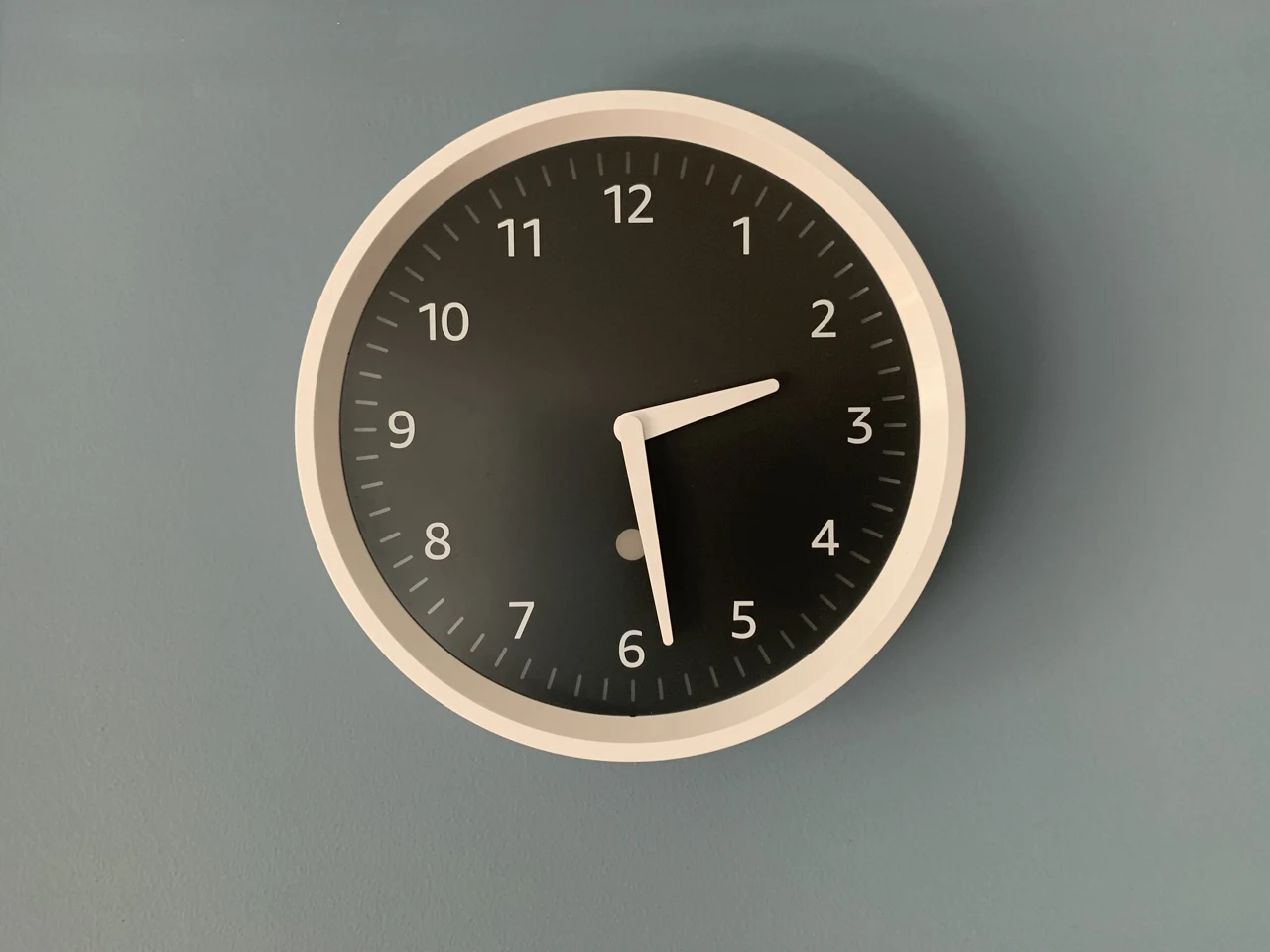
Imagine a guest, Mara, visiting a friend before another commitment. They have agreed that she will leave at seven. In the first version, an existing clock is in the room's shared sightline. For this fictional scene, both people can actually read it from their seats; no claim is being made about a real model or everyone's visual needs.
Mara can glance at it without taking out a device. Her host can also see the same reference. Shortly before seven, either can say, “Do you still need to leave at seven?” The clock has made information available, but it has not supplied the answer or decided whose responsibility it is to end the conversation.
The host does not comment on every glance. If Mara looks at the time twice, that need not become evidence that the visit is going badly. Likewise, a clock visible over someone's shoulder is not automatically a deliberate departure signal. Ask when the meaning matters.
Second visit: the same commitment, a private check
In the second version, the room has no clock visible from the seats. Mara checks a suitable personal time display briefly when she needs to. She has already mentioned her departure plan, so the host does not have to infer what the check means.
Mara might say, “I am checking because I need to leave at seven; I am enjoying catching up.” She does not have to offer that reassurance every time, and the host should not demand proof that a private glance was innocent. The point is to remove an avoidable ambiguity, not to script a universally correct way to behave.
This version may suit someone who dislikes a prominent time display in the room. It may be less convenient for another guest who would rather not handle a device during a visit. Neither preference establishes what everyone else ought to choose.
Decide whether the room needs a purchase
The useful discussion is concrete: “Would it help to see the existing clock from here, or are you happy checking your own time?” If a suitable view already exists, no new clock is needed. Do not move or mount a product in a way that conflicts with its actual instructions just to reproduce the imagined scene.
If considering a clock, distinguish the room's decorative preference from whether the particular users can read it in the intended position. Inspect the actual dimensions, display, operating information and any sound it makes. A product photograph or a claim that large numbers are easy to read does not establish the experience for a particular guest.
Leave the ending with the people
As seven approaches in either scene, the host can offer a clear transition: “Shall we finish this thought before you head out?” Mara can agree, change the plan if she genuinely can, or leave as arranged. A visible clock does not grant permission to pressure her to stay, and a private check does not require an abrupt departure.
The same room can work differently on an afternoon with no deadline. Keep the clock if the household likes it; leave it out if it serves no useful purpose. Its value is a matter of actual use and preference, not a guarantee that the conversation will feel more relaxed.
Sources & further reading
Published sources for the details and examples discussed in this story.