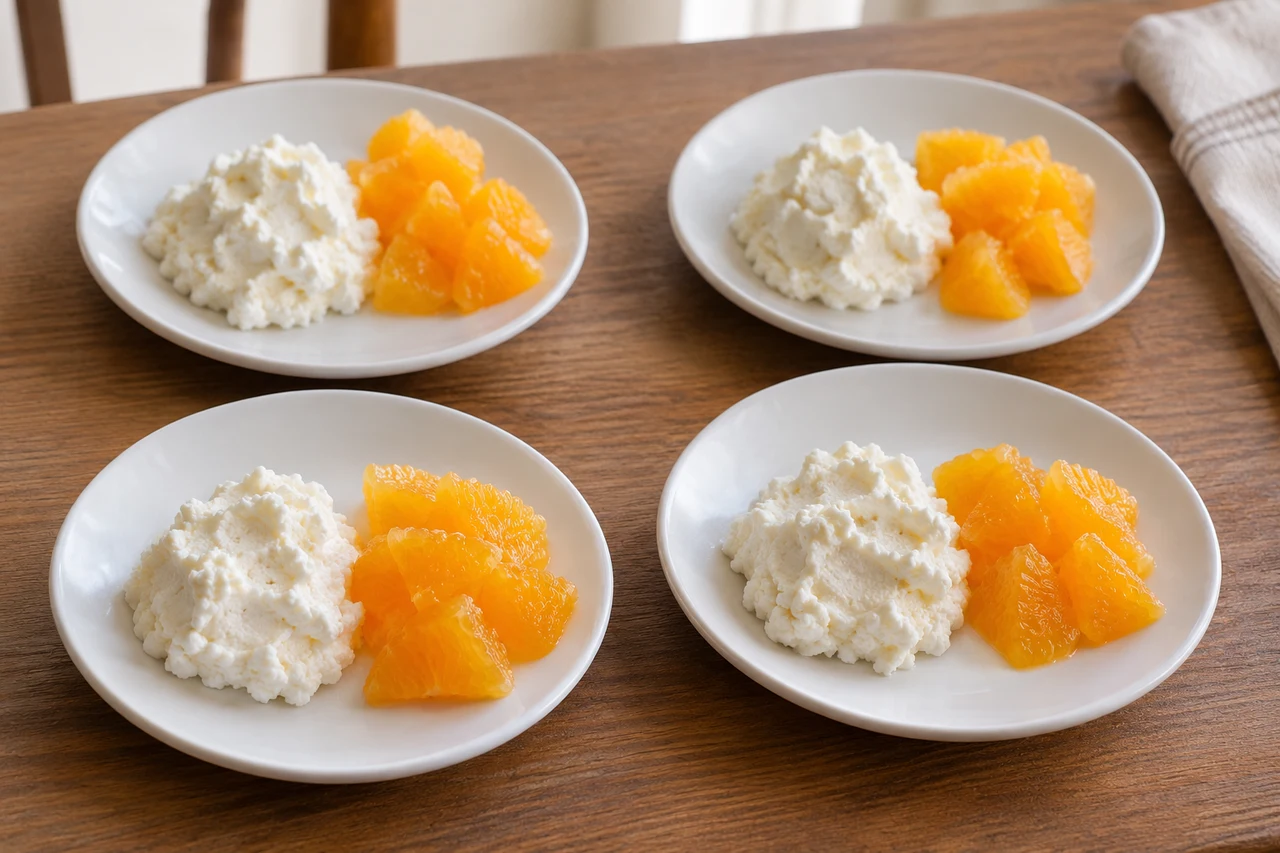
For a small adult gathering, a spooned ricotta portion and orange pieces can remain separate on the plate rather than become another layered cup. This original recipe proposal makes four modest servings with one cheese mixture. It is untested: we have not prepared, tasted or served it to guests. Check the actual diners' requirements and ingredients before choosing it for a real table.
Measure the complete four-plate list
Use 300 grams commercially prepared ricotta made from pasteurized milk, 400 grams prepared orange flesh and 1 teaspoon vanilla extract. Up to 2 teaspoons honey for the whole recipe are optional. Each of four plates receives 75 grams ricotta before the vanilla is mixed in and 100 grams prepared orange. No biscuits, nuts, chocolate, cream or decorative leaves are required.
The orange amount excludes peel and any seeds or unsuitable parts. Buy enough fruit to supply the prepared weight rather than assume every orange gives the same usable quantity. Ricotta contains milk, and the recipe is not dairy-free or allergen-free. Check the actual vanilla and other labels too. Any independently added accompaniment needs its own ingredient review.
Prepare the fruit before arranging the plates
Begin with clean hands, clean plates, a clean knife, board, mixing bowl and utensils. Wash the whole oranges under running water before peeling or cutting, even though the peel will not be eaten. FDA explains that washing before peeling helps avoid transferring dirt and bacteria from the surface; it advises against soap on produce.
Remove peel, seeds and unsuitable parts, then cut the usable flesh into small bite-size pieces and weigh 400 grams. Work away from equipment used for raw meat, poultry or seafood. Keep the ricotta refrigerated while preparing the fruit. These are proposed kitchen steps, not observations about a particular orange variety, tested juiciness or a timed preparation.
Make one mixture and four separate arrangements
Put the 300 grams ricotta in the bowl and stir in the measured teaspoon of vanilla until distributed. Divide the mixture evenly among four suitable plates. Place 100 grams prepared orange beside each portion. Keep the fruit alongside the cheese rather than folding it through; that separation is the intended arrangement, not a promise about how long a real mixture will hold its shape.
If using honey and it is suitable for the diners, distribute the optional 2 teaspoons as one-half teaspoon per plate. It can be omitted entirely. No additional syrup or sweetening step is needed for the stated recipe. Taste only with a clean utensil and when the ingredients are suitable for you. No sweetness, texture or guest-response verdict is claimed here.
Keep the finishing step close to serving
Serve promptly after arranging. If waiting, cover suitably and refrigerate at or below 40°F/4°C, following any stricter ingredient instructions. FDA's prompt-chilling boundary for perishables is two hours, shortened to one hour above 90°F; it is not a reason to keep dessert on display until that limit. This proposal establishes no new shelf life for assembled plates.
Four ordinary plates and suitable spoons can serve the plan without a matching dessert collection. Before purchasing decorative toppings or special glasses, decide whether they help the intended simple arrangement. If you later make the dessert, note the real fruit quantity and presentation you used. The editorial proposal supplies a complete starting list and method while leaving actual preparation and preference to an honest future attempt.
Sources & further reading
Published sources for the details and examples discussed in this story.