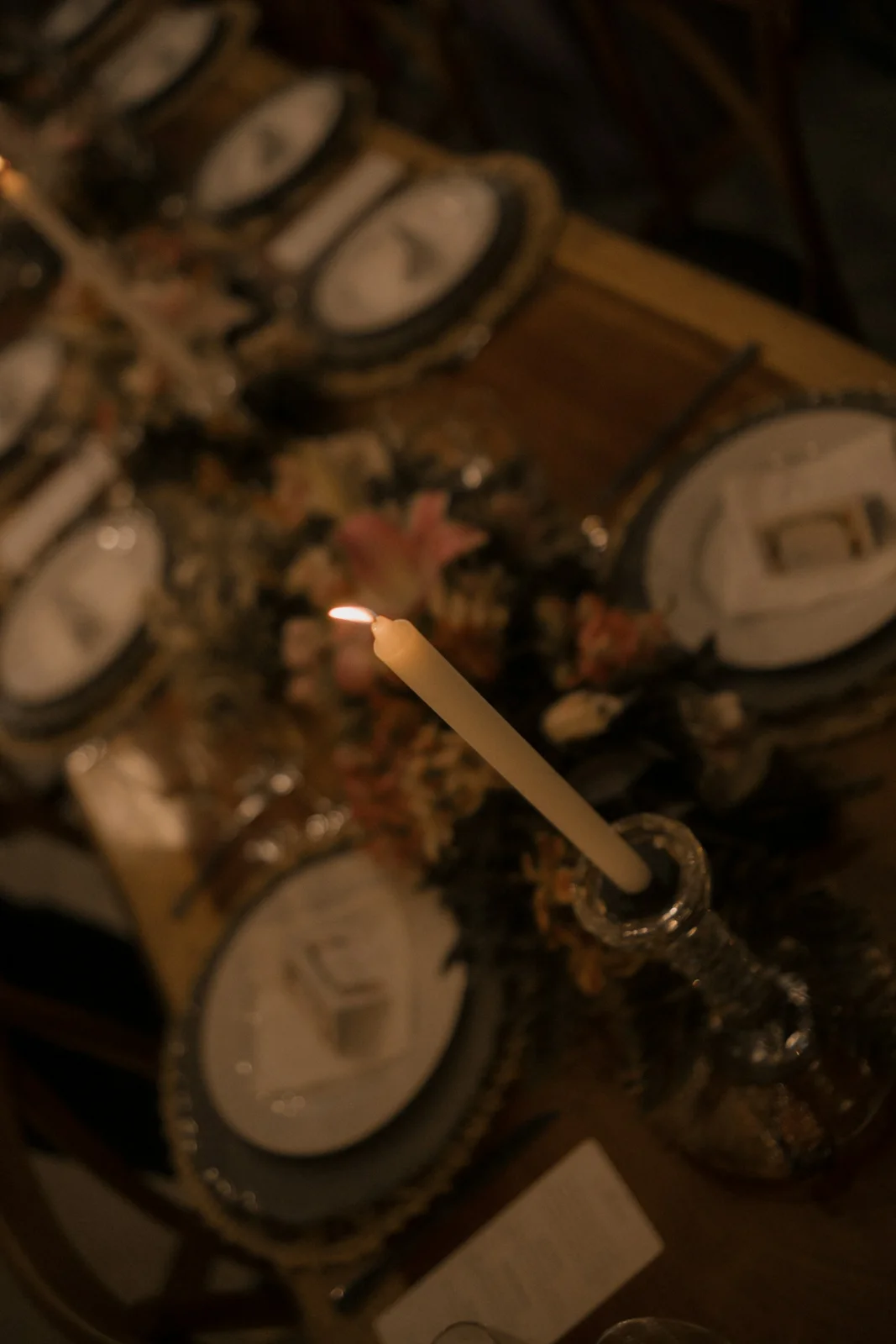
A dinner table can look composed without being full. In a small dining room, the most generous luxury is often an unobstructed place for a glass, a comfortable chair and a serving dish that can be passed without moving a centerpiece. Start with the number of people and the food you intend to serve. Let those practical details shape the styling rather than squeezing dinner around the decorations.
Set one place before styling the entire table
Lay out a plate, cutlery, water glass and napkin at a real seat. Sit down, move your elbows and reach for the glass. Then repeat at the next chair. This quick rehearsal reveals more than measuring the tabletop alone because chair width, table legs and the size of the dinnerware all affect how the setting feels.
If the meal is served family-style, leave a clear landing place for the dishes. If the table is narrow, a sideboard or a stable nearby surface can hold water and extra plates. Avoid balancing hot serving pieces on decorative stools or introducing furniture that makes the route through the room awkward.
Choose one material to carry the mood
A linen runner, a textured napkin or a favorite set of ceramics can establish the atmosphere. Everything else can stay quiet. Repeating one color in two modest details usually feels more intentional than buying a complete seasonal collection of napkins, candles, chargers and glassware.
Before buying linen, read its care instructions and consider where it will dry and be stored. A cloth that requires care you dislike may be saved for occasions that never arrive. Borrowed or existing pieces can be mixed deliberately: keep the arrangement consistent at each place so the variation feels relaxed rather than accidental.
Let people see one another
Keep the central arrangement low enough that conversation does not require leaning around it. A few small vessels can be easier to move than one large floral display. Choose unscented table decoration if the meal's aromas are part of the occasion, and leave room for a guest to set down a handbag or move their chair comfortably.
Do a final check from a seated position. An arrangement that appears modest when you stand may sit directly at eye level when you sit down. If you cannot see the person opposite, move something. The flowers are there to support the gathering, not to become the obstacle everyone politely ignores.
Use light with a practical safety plan
Warm room lighting and a small rechargeable lamp can create an inviting table without an open flame. The U.S. Fire Administration recommends considering battery-operated flameless candles. If you use real candles, its guidance calls for stable holders, separation from combustible items and extinguishing them when you leave the room.
Choose the lighting before arranging the table, particularly when napkins, foliage or loose sleeves could approach a flame. A beautiful photograph is not a placement guide. If an adult will be moving repeatedly between the kitchen and dining room, a flameless option can simplify the evening. Follow the lighting product's own instructions as well.
Buy for the next five dinners
If a purchase is needed, prioritize pieces that solve a repeat problem: enough everyday glasses, a washable tablecloth in the right dimensions or a serving platter that fits in the cupboard. A single versatile item may do more for future gatherings than a set of decorative objects that only works for one menu.
Check storage dimensions, return conditions and care requirements before ordering. Photograph your finished table so the next setup is easier, then note one thing that got in the way during the evening. Refine that detail next time. The aim is a table that feels effortless to the guests because the useful decisions were made beforehand.
Useful places to look
Sources & further reading
Published sources for the details and examples discussed in this story.