Flowers bought on the way home can arrive just as the kitchen needs attention. A more useful dinner plan gives the stems a preparation window before they reach the table. RHS cut-flower guidance covers conditioning and continuing vase care, with specific advice for soft stems such as tulips. The fictional sequence below organizes those tasks; it is not a report that a bouquet recovered or lasted a measured number of days.
Make the working area ready before unwrapping
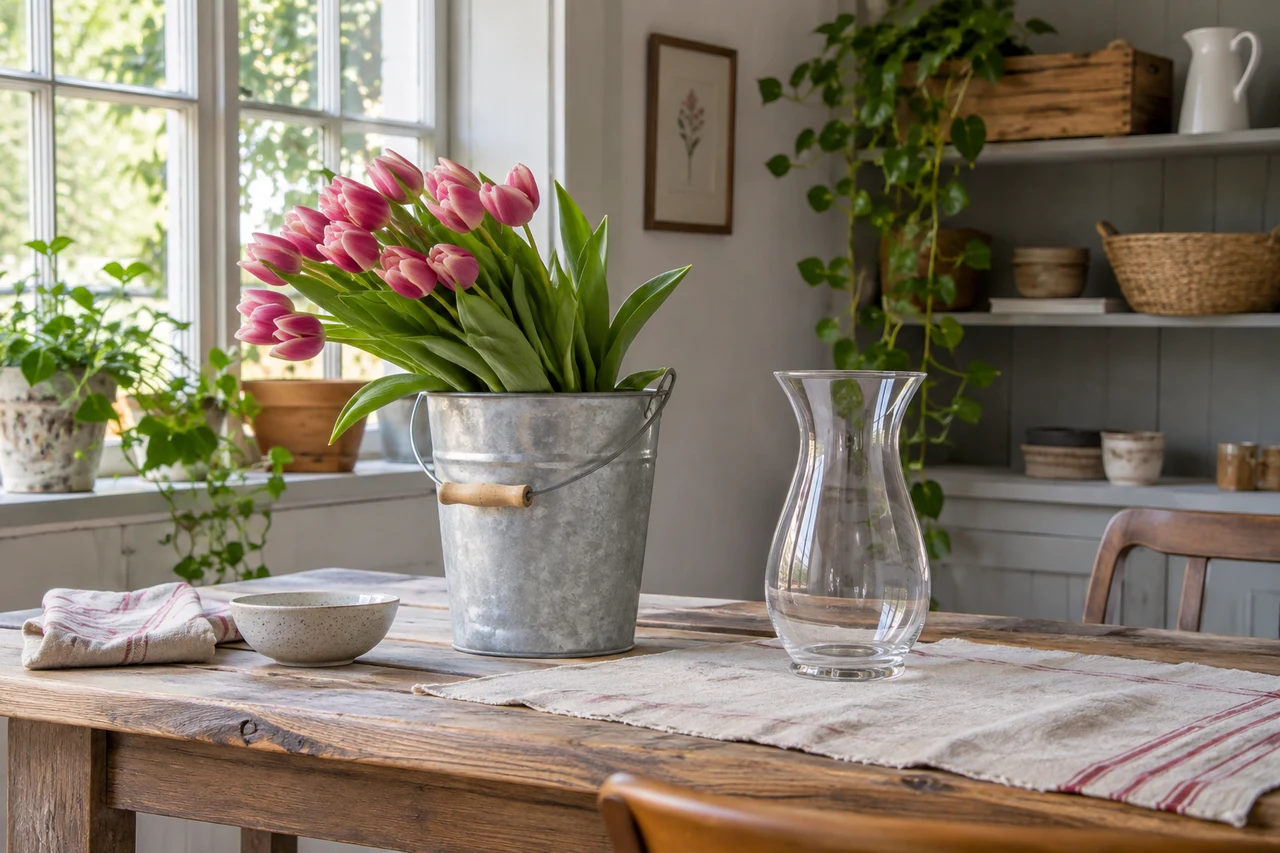
Imagine dinner is planned for later, with tulips already selected for the actual household. First establish a separate flower-work area, a suitable clean bucket and clean vase, appropriate cutting tools and somewhere stable for conditioning. Keep the work away from food preparation. RHS recommends gloves when handling cut flowers and notes that some plants are poisonous or irritating; suitability for pets and household members needs its own reliable check.
Do not begin by placing the full wrapped bunch in the final centerpiece position. The working bucket and display vase have different jobs. Leave the final vase empty while the stems receive their care, and keep the table available for place settings instead of spreading packaging across it.
Condition the identified stems, rather than every flower alike
For tulips, use the applicable RHS soft-stem guidance: prepare stems with a suitable cut, remove foliage that would sit under water, and place them in water for conditioning. The guidance describes a cool resting period before arranging. Where tulips are bent, it describes supporting them in newspaper while they condition; that is a conditional measure, not a promise to revive every damaged stem.
Follow the complete stem-specific instructions and any appropriate flower-food packet directions. Do not borrow boiling-water treatments intended for other stems or invent a household additive. This guide has not inspected the actual bunch, performed a cut or established that a particular stem can be saved.
Return to the display only when preparation is complete
While the flowers rest, set a real place setting and identify the useful space left for the vase. In this invented dinner plan, a modest vase sits off the main serving path. If its scale conflicts with the meal, choose a different stable display location rather than compressing more stems into an unsuitable opening.
When arranging, retain the separation between flowers and food work. Do not leave cutting tools among the cutlery. The eventual appearance belongs to the actual stems and vessel; the planned sequence establishes neither an arrangement photograph nor a guaranteed seated sightline.
Carry the care forward after the gathering
RHS continuing care includes keeping vase water attended to, removing deteriorating material and using appropriate conditions. Keep those tasks in the next-day plan instead of treating the end of dinner as the end of flower care. Follow the actual stems and product instructions rather than a universal bouquet timer.
Before buying extra equipment, ask whether the missing resource is simply preparation time, a suitable bucket or a clean vase already owned. A specialist tool should answer an actual task. The complete purchase includes flowers whose identified care you can manage, not merely a color that matches the napkins.
Sources & further reading
Published sources for the details and examples discussed in this story.