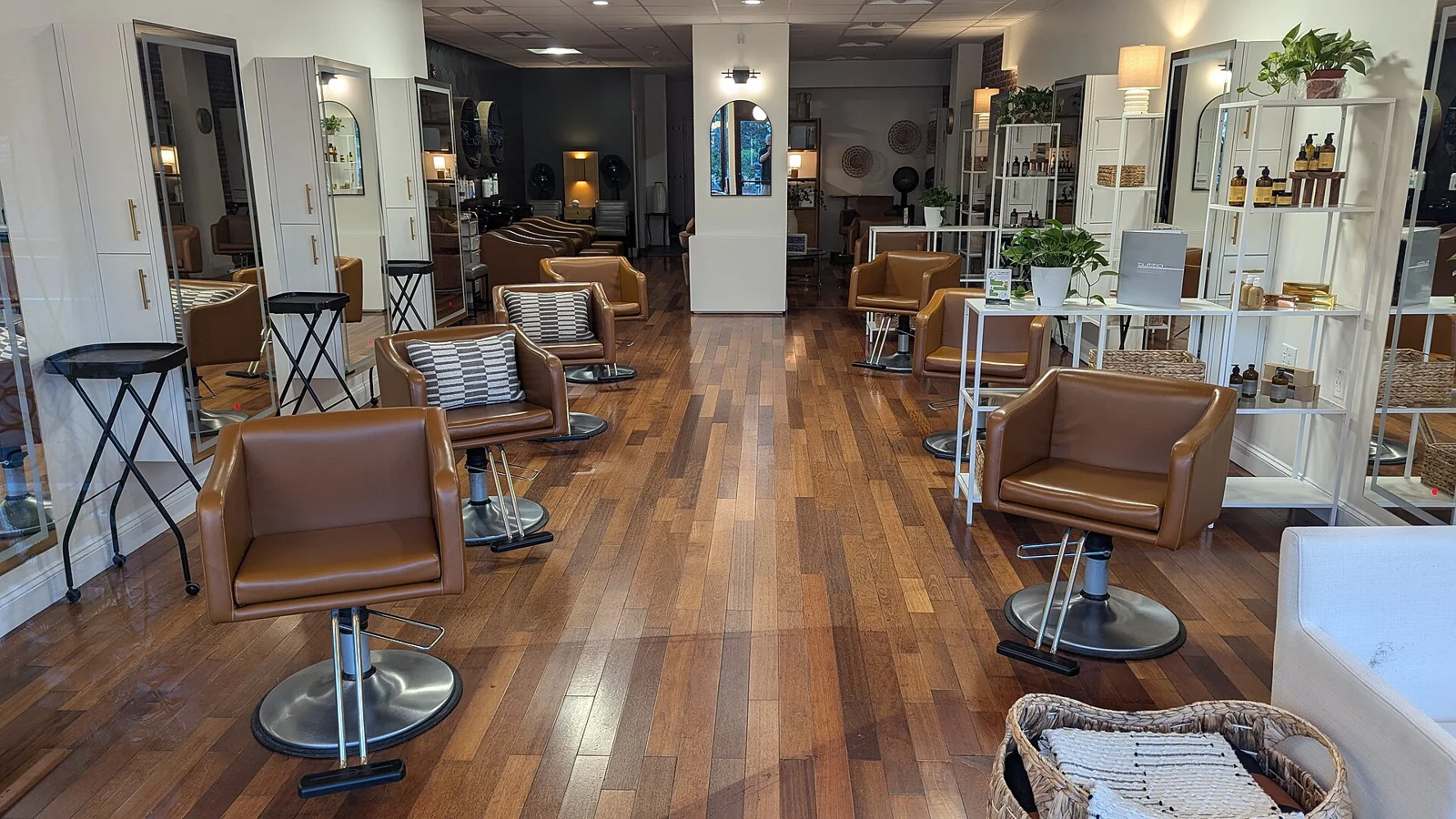
Preparing for an event with a friend can add conversation to an ordinary routine. It can also introduce an audience at a time someone would prefer to be alone. Neither preference tells us whether a person feels confident, sociable or sufficiently excited about the occasion. The two scenes here are invented adult situations. The people have the same established personal routines, suitable items and practical arrangements in both. No new product, beauty procedure or shared makeup is proposed. FDA guidance says not to share makeup and to follow product directions; company is a social choice, not a reason to exchange products or change care instructions.
Separate wanting company from wanting help
Imagine Rae and Bea attending the same event. Rae enjoys talking while choosing the last details of an already familiar outfit. Bea prefers to prepare privately and meet when ready. Neither has asked the other to perform a beauty service, advise on a product or judge a result.
That distinction matters because “let's get ready together” can carry several assumptions. Does it mean sit in the same room, use the same resources, help with a particular task or take photographs? A shared room does not automatically include all those activities. Ask about the experience wanted rather than assume one invitation authorizes the rest.
Scene one: the conversation is welcome
In the first imagined arrangement, both adults want the company. They have an appropriate room and their own established arrangements without disrupting each other's needs. Conversation can happen around the routine rather than turn into a running commentary on what each person should change.
The pleasant part, for these fictional people, is being together before the event starts. If one person finishes first, that does not make them an examiner waiting to approve the other's appearance. They can sit, talk or continue with their own plans without making the remaining preparation feel observed as a performance.
Photography is a separate choice. A social getting-ready invitation does not require a before picture, a filmed routine or a finished reveal. The company can remain private even when the later event is public.
Scene two: privacy comes before a later meeting
For the alternative, imagine Rae and Bea preparing separately, then meeting afterward. The same personal routines take place. What changes is that each person has control over their own audience and attention during that interval.
They can still share anticipation when they meet. Preparing privately does not mean rejecting friendship or concealing a problem, and meeting later does not make the social part less meaningful. It may simply give the conversation a clearer beginning after both have finished the things they wanted to do alone.
This version also avoids turning a friend's ordinary choices into unsolicited advice. Help can still be requested for a specific appropriate task, but it is not assumed to come with the friendship or the event invitation.
Offer either preference in ordinary language
An original shared-room invitation might be: “I'll be getting ready at home and would enjoy some company if that sounds good to you. If you prefer your own space, let's meet afterward instead.” The alternative is named without requiring a personal explanation.
An original private-preparation invitation could be: “I'm going to get ready on my own, then I'd love to meet before we leave. Would a quiet catch-up afterward suit you?” It offers company while making the private interval clear.
These are fictional wording examples, not messages sent to anyone. A real invitation needs the actual arrangements and the freedom for the other person to decline. There is no need to describe privacy as shyness or togetherness as proof that everyone is having a good time.
Choose purchases around a real need
Before buying a matching getting-ready set, extra mirror or themed accessory, decide whether it serves the people who actually want the shared arrangement. A coordinated photograph is not the same thing as a welcome experience. Existing suitable resources may already be enough, or private preparation may remove the supposed need altogether.
Keep any real professional or prescribed care instructions unchanged. The useful choice in these scenes is the company and its boundaries, not a different routine.
Sources & further reading
Published sources for the details and examples discussed in this story.